


Additive manufacturing, or what is now more commonly known as 3D food printing, has grown massively over the past few years within the tech sector. In addition to providing greater convenience if introduced into domestic kitchens, this device also has the potential to radically change food production practices and combat wastage issues. But in this “brave new world” of emerging technology is this device sustainable? Does 3D food printing have the capacity to create tasty and nutritious food, which is more environmentally friendly and distributed more efficiently or traded more fairly? Or is it just a new fad which will prove to have no greater impact on global food production than the latest kitchen appliance?
At the present time around one third of all food produced is wasted. In an effort to combat this the food industry from farmers, wholesalers, supermarkets and the government are working both together and individually in an attempt to tackle this problem. Due to the significant amount of food wastage in food production there is a huge incentive to find new ways in which to reduce these figures. According to IDTech 3D food printing may in fact play an important role in facilitating this.
The concept of 3D printing is relatively simple in that a 3D printer acts in the capacity of an industrial robot using CAD (Computer Aided Design). This technology is then able to create models of any size, shape or geometry. All of this aims to be achieved in the future by a counter-top sized device that has the ability to print tasty, nutritious and affordable meals without the need for the operator to have an extensive knowledge of nutrition or possess any cookery skills.
Until 2014 the emphasis on food printers was mainly to create intricate sugar-laden confectionaries such as those produced by ChefJet. 3D printing has been used by chefs and patissiers on a regular basis to impress their clientele, experimenting with textures and shapes, creating new designs, and saving both time and money. Current technology has now allowed food such as cheese, turkey, hummus, celery and scallops to be printed by applying liquid versions of the foods, layer by layer to build up an edible meal. The ultimate aim is to use hydrocolloids (substances that form gel with water) to create a variety of ‘food inks’ and as there is no prepping of fresh ingredients there is no actual food wastage, which could have a huge impact on sustainability. Renowned chef Homaru Cantu claims that there is the potential to be able to “grow cook or prepare foods without the negative industrial impact from fertilisers to packaging.” Therefore, the production chain for food would nearly be eliminated.
With the issue of ‘food waste’ and the prospect of ‘future food trends’ Cooperative DOOR (an independent farmers association in the Netherlands) joined forces with Oceanz 3D printing to examine the feasibility of the 3D printing of vegetables. The collaboration of these two companies affords a good blend of two quite different growth markets. The first set of results are due to be published soon. Cooperative DOOR have been involved in several projects so far in an attempt to minimise food wastage at primary production level to zero. So far the projects have involved; drying tomato slices for use in the catering industry and commercial restaurants; tomatoes rejected on the basis of their size or shape used to create a base for a tomato sauce or a tapenade, and finally with their current research and involvement in 3D food printing they are aiming to achieve their sustainability goal of achieving zero wastage of all its produced food products.
With the global population set to reach 9 billion by 2050 the UN’s Food and Agricultural Organisation predict that agricultural systems will be unable to supply food to everyone. Therefore, 3D food printing is a viable option for those people in the world who do not have access to fresh, nutritious, and affordable ingredients.
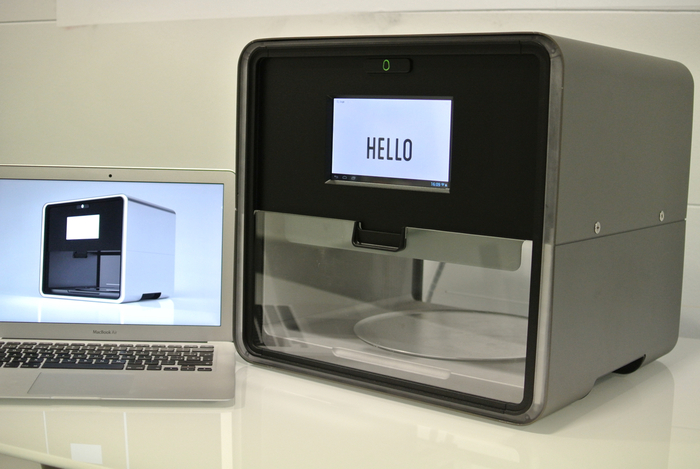
These goals are now closer to being achievable with the recent development of Foodini, a new machine created in 2014 which not only allows the ability to print a wider range of foods, but also offers the potential for mass marketing in several countries around the world which prior to this had been too expensive to achieve. The growing popularity of the western diet in other cultures also plays a factor in our depleted resources, and 3D food printing could be the answer to meeting the increased demands in an affordable way.
Another advantage of 3D food printing is the ability to reduce food waste as it facilitates the reproduction of ‘ugly’ food. Natural Machines launched Foodini at The World Seafood Congress in Rejkjavik, Iceland, demonstrating their product’s ability to reprocess cuts of fish into more appealing shapes. Working with an Icelandic food company and biotech institute their aim is to 3D print nutritious cuts of fish that usually get left on the bone and discarded during mass manufacturing. In addition, Kucsma states there is a concept of ‘ugly’ fruits, vegetables and meat that are often rejected despite being perfectly good produce, on the basis that they have an irregular appearance and do not pass quality control so are often thrown away. It is this perfectly good produce that 3D food printing could utilise to combat food wastage and shortages.
The customisation and nutritional value aspect are also an important consideration as the 3D printer can be programmed with the ability to produce the correct portion size adjusting to larger or smaller as necessary. This can be adapted for each individual ensuring they obtain their optimum calorie and nutritional intake.
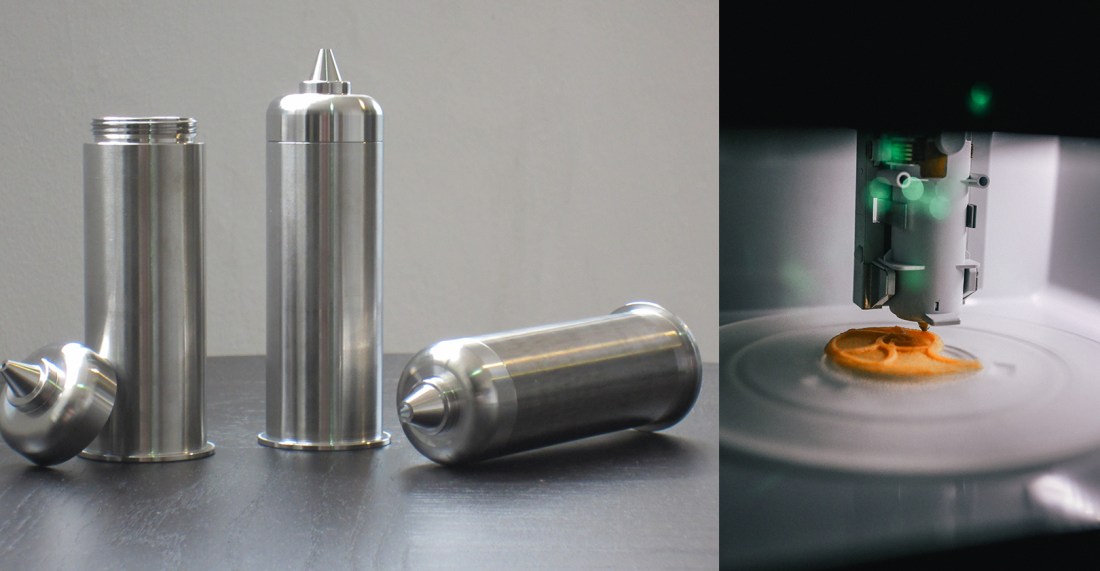
So how does 3D printed food compare to traditional handmade food? The CEO of Beehex states that in taste and quality it is no different at all as the ingredients are fresh and tasty with nothing artificial added. The difference however is in the production. It is a robot making the food rather than a person which potentially makes the product, “cleaner, quicker, more efficient and consistent.”
3D food printing as a technology undoubtedly has the potential to provide us with many benefits and hopefully, with enhanced product design will enable us to produce a much healthier alternative to the processed foods that are currently on offer. People generally tend to regard new and emerging technology with an element of scepticism and suspicion and 3D food printing has so far largely been associated with artificial ingredients, processed food, fake food or “frankenstein food.” If 3D printed food is seen more regularly in restaurants and it becomes the norm to eat printed food, people may well come to realise it can be a healthier alternative to processed food. Furthermore, the fact that 3D food printing has the potential to rectify bigger issues within the food industry by eliminating the production chain for food, reducing food wastage and providing nutritious food to people in parts of the world unable to access it, may well help to increase its popularity and offer the solution the farmers, wholesalers, supermarkets and government are looking for.
 Bossgirlsblogs
Superb, what a blog iit is! This webpage presents useful data to us, keep it up. http://eleanornortonbailey.co.uk/page8.php
LikeLiked by 1 person